Def of Disorder: Meaning, Examples, and How It Differs From Disease
If you searched for "def of disorder," you are probably trying to pin down a word that changes slightly depending on context. In everyday speech, disorder can mean confusion, mess, or a lack of order. In medicine and psychology, it usually points to a disturbance in how the body, mind, behavior, or a system functions. The word matters because it can shape how seriously people read symptoms, labels, and health information. For mental health topics especially, a disorder term should be understood as a structured clinical concept, not a personal identity or a shortcut for judging someone. That is also the spirit behind using an educational psychology self-assessment resource: it can support reflection, but it is not a substitute for care from a qualified professional.
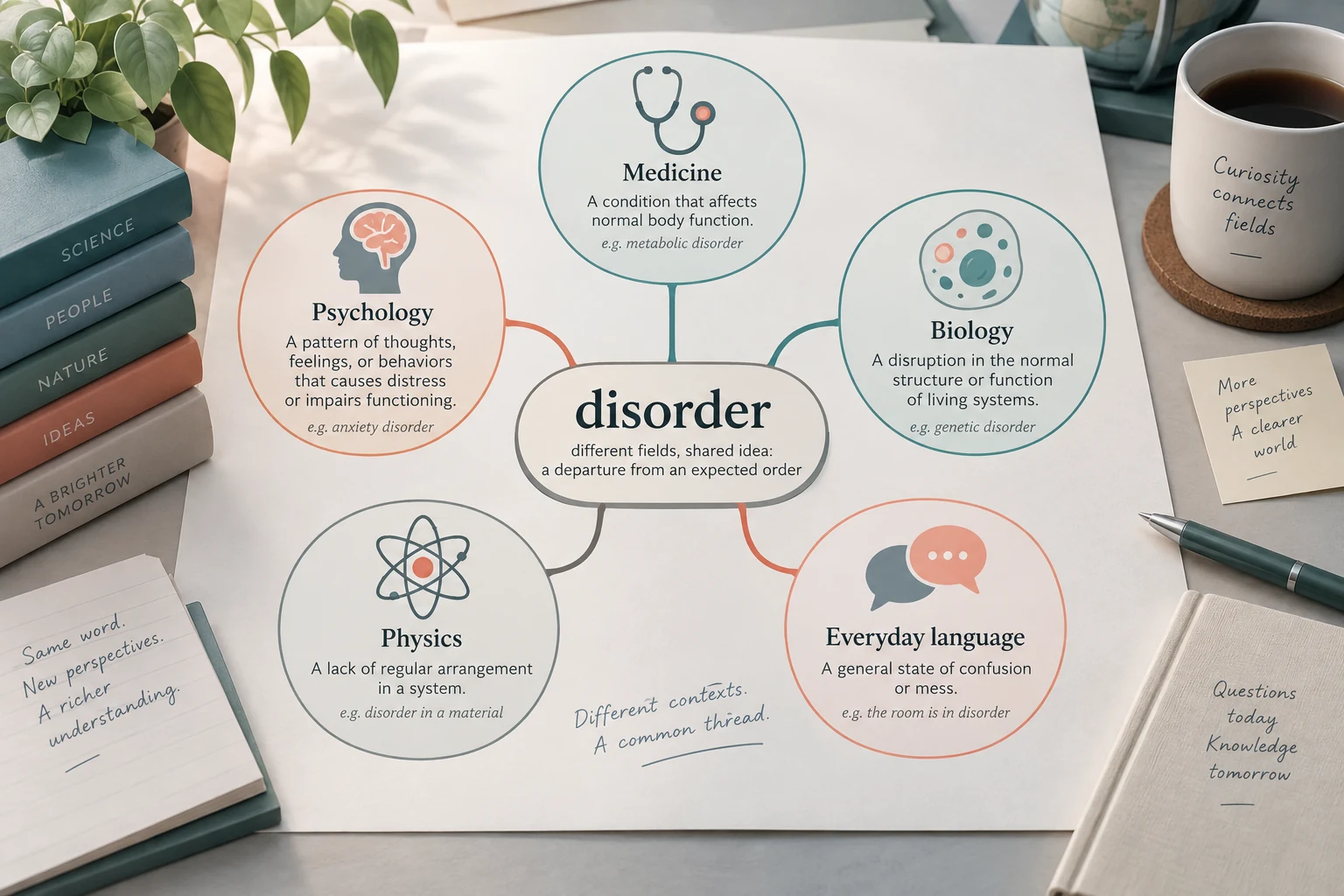
What Defines Disorder?
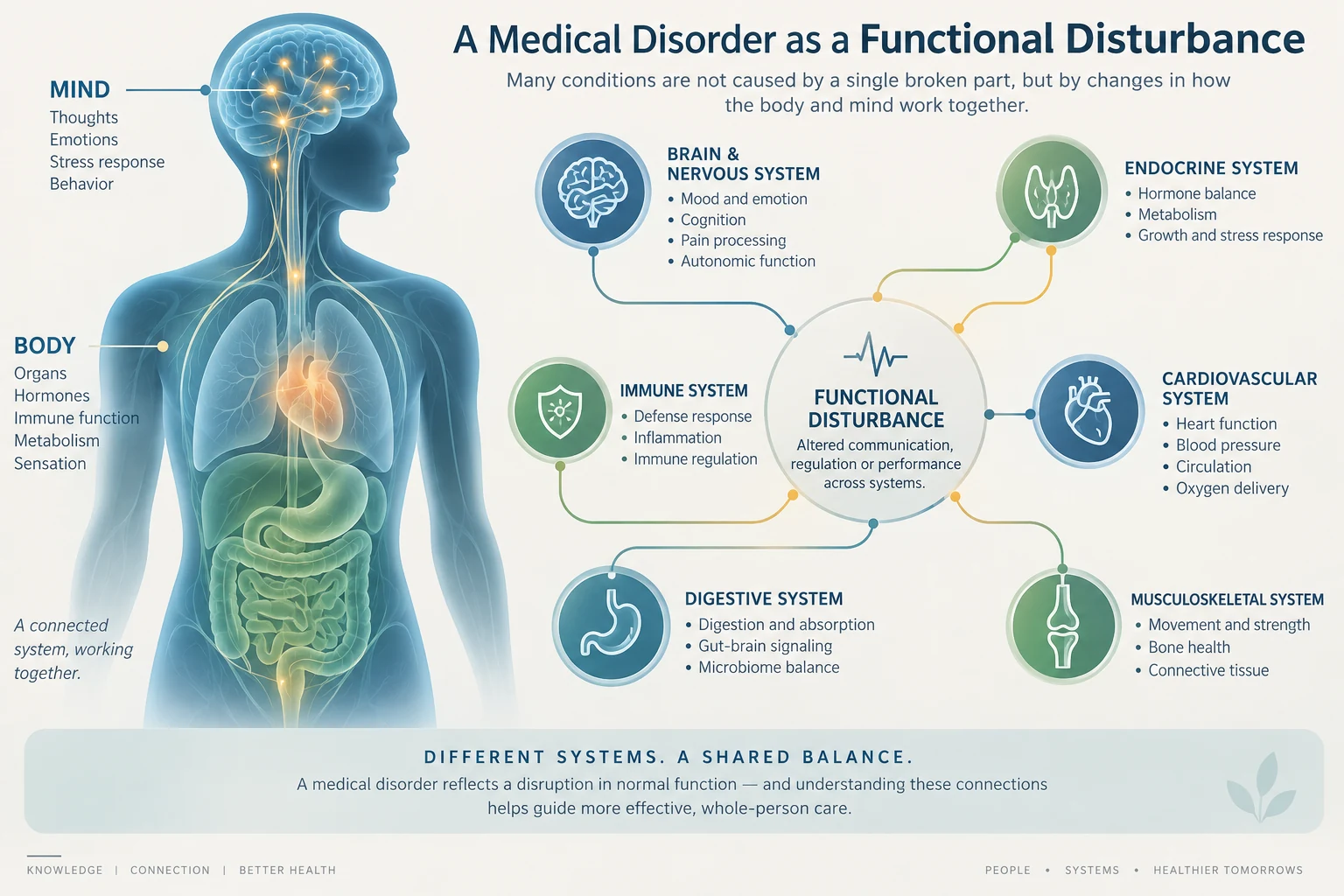
The simplest disorder definition is a disruption of normal order or normal functioning. That definition works broadly enough to cover a messy room, a biological system, a material in physics, or a mental health category. The key idea is not that something is "bad" in a moral sense. It is that a pattern has become irregular, disturbed, impaired, or less organized than expected for that context.
In health writing, disorder often refers to a functional disturbance. It may affect thinking, emotion, behavior, movement, digestion, immunity, sleep, development, or another area of life. A disorder may have clear signs, subtle symptoms, or a pattern that becomes meaningful only when a trained professional considers duration, severity, context, impairment, and possible causes.
That is why the word should be used carefully. A disorder is not simply a trait, a bad day, a difficult mood, or an unusual preference. A shy person is not automatically "disordered." A person who feels nervous before an exam is not automatically experiencing an anxiety disorder. Clinical language usually becomes relevant when a pattern is persistent, distressing, impairing, or part of a recognized set of criteria.
Disorder Medical Definition
The disorder medical definition usually centers on abnormal function. A disorder may involve the body, the mind, or both. It can be physical, mental, developmental, genetic, behavioral, immune-related, neurological, or functional. Some disorders have well-understood biological mechanisms. Others are named by a pattern of symptoms and functional impact even when one single cause is not obvious.
This is one reason disorder is often compared with disease. A disease is commonly used when a condition has a more identifiable pathology, cause, structural change, or measurable process. A disorder can be broader and sometimes less specific. It may describe disruption before the exact underlying cause is fully known, or it may describe a recognized functional pattern where structure is not the main issue.
For example, sleep disorders affect sleep quality, timing, or behavior. Eating disorders involve harmful patterns around eating, body image, or related health risks. Neurodevelopmental disorders affect developmental functions such as attention, learning, communication, or social interaction. Mood disorders involve patterns in emotional regulation, energy, and functioning. These examples show why the word disorder is flexible: it names a meaningful disturbance without always claiming a single cause.
Disorder vs Disease vs Syndrome vs Condition
People often use disease, disorder, syndrome, illness, and condition as if they are interchangeable. In casual conversation that may be harmless, but in health writing the differences can help.
A disease often suggests a condition with a known or suspected biological process, recognizable signs, and a clearer path for testing or classification. Diabetes, influenza, and rheumatoid arthritis are common examples where the word disease feels natural because there are measurable processes or established biomedical explanations.
A disorder points more toward disruption of function. It may involve symptoms, behavior, cognition, development, or body systems that are not working as expected. The cause may be complex, mixed, still being studied, or less visible on routine tests. Anxiety disorders, sleep disorders, autoimmune disorders, and movement disorders illustrate the breadth of the term.
A syndrome is a cluster of signs or symptoms that tend to appear together. A syndrome may later be connected with a specific disease process, but the word itself emphasizes the pattern. For instance, a clinician may recognize a syndrome because certain symptoms repeatedly occur as a group.
A condition is the broadest word. It can refer to almost any health state, including a disease, disorder, injury, pregnancy, or general medical status. Because condition is flexible and often less emotionally loaded, it can be useful when the exact category is unclear.
Here is a quick comparison:
| Term | Main emphasis | Simple example |
|---|---|---|
| Disease | Pathology, cause, or body process | Influenza |
| Disorder | Disturbed function or pattern | Sleep disorder |
| Syndrome | Symptoms that occur together | Metabolic syndrome |
| Condition | Broad health state | Chronic health condition |
The lines are not always sharp. Medical knowledge changes, and a label may become more precise as research improves. The safest habit is to treat these terms as communication tools rather than rigid boxes.
Disorder Symptoms and Examples
Disorder symptoms depend entirely on the type of disorder being discussed. There is no single symptom that proves a disorder exists. Instead, symptoms become meaningful when they form a pattern across time, context, intensity, and life impact.
In mental health, symptoms might involve emotion, thinking, behavior, attention, sleep, appetite, relationships, motivation, or physical stress responses. In a mood disorder, a person may experience changes in mood, energy, interest, sleep, concentration, and daily functioning. In an anxiety disorder, worry or fear may become persistent, intense, and disruptive. In a conduct-related disorder, the concern is not simply one rude act; it is a persistent pattern of behavior that violates major rules, rights, or age-appropriate expectations.
Physical disorders can look very different. A movement disorder may affect coordination or involuntary movement. A sleep disorder may affect sleep timing, breathing during sleep, or daytime alertness. A digestive disorder may involve pain, bowel changes, or food-related symptoms. A genetic disorder may affect development, metabolism, or body systems from early life.
The practical takeaway is this: examples help explain the word, but they should not be used for self-labeling. A symptom list is not the same as an evaluation. If symptoms are intense, persistent, worsening, or affecting school, work, relationships, safety, or basic care, it is wise to speak with a qualified health professional.
What Are the 7 Types of Disorders?
There is no universal list of exactly seven types of disorders. The number depends on the system you are using: medicine, psychology, education, biology, or a search-engine summary. Still, readers often ask for "7 types" because they want a manageable map.
One useful educational grouping looks like this:
- Mental health disorders, such as anxiety, mood, trauma-related, obsessive-compulsive, or psychotic disorders.
- Neurodevelopmental disorders, such as attention, learning, communication, or developmental conditions.
- Neurological disorders, such as seizure, movement, or nerve-related conditions.
- Sleep-wake disorders, such as insomnia-related or breathing-related sleep problems.
- Eating disorders, involving persistent patterns around eating, body image, and health risk.
- Genetic or developmental disorders, involving inherited or early-development differences.
- Functional or systemic disorders, where symptoms reflect disrupted system function, sometimes without a single visible structural cause.
This list is not a formal classification. It is a reader-friendly way to see why disorder is such a broad term. In professional settings, classification comes from recognized manuals, clinical training, and careful evaluation.
Disorder Person Meaning
"Disorder person meaning" is a common but awkward search phrase. A clearer version would be: what does it mean when a person has a disorder? The most respectful answer is that a person may be living with a recognized pattern of symptoms or functional difficulties. It does not mean the person is broken, dangerous, weak, or defined by a label.
This distinction matters in psychology. A mental disorder describes a clinically significant pattern involving cognition, emotion regulation, behavior, distress, impairment, or risk. It is not a character verdict. Many people experience mental health symptoms at some point, and many improve with support, skills, treatment, social connection, lifestyle changes, or environmental adjustments.
Language can either reduce stigma or add to it. "A person with a disorder" is usually more humane than turning the label into the whole identity. Even better, when possible, name the specific context: a person living with panic attacks, a student managing attention difficulties, or an adult seeking help for persistent low mood.
For self-reflection, broad educational tools can help people organize what they are noticing. A gentle mental health self-reflection tool may give language for patterns in thoughts, feelings, and behaviors, while still leaving clinical interpretation to qualified professionals.
What Is Disorder in Biology?
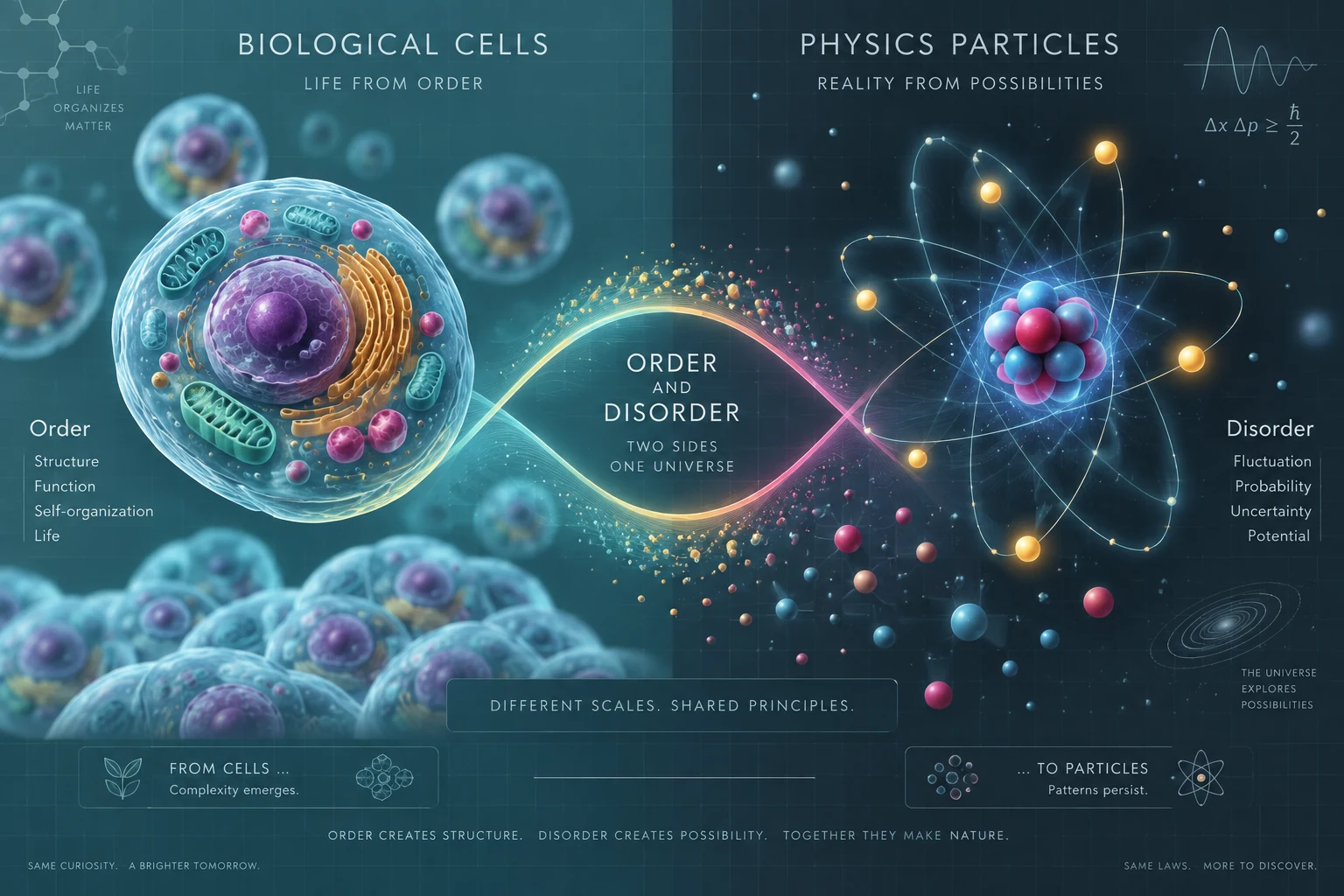
In biology, disorder can refer to a disruption in normal biological organization or function. A biological disorder might involve genes, cells, tissues, organs, immune activity, metabolism, development, or nervous system signaling. Genetic disorders, metabolic disorders, immune disorders, and developmental disorders all use the word in this broad sense.
Biology also uses disorder in more technical ways. For example, a protein may have disordered regions, meaning parts of its structure are flexible or do not fold into a single stable shape. In that context, disorder does not mean "bad." It describes structural flexibility or lack of fixed order at the molecular level.
So the meaning depends on scale. At the whole-person level, disorder may describe a health condition that affects functioning. At the molecular level, disorder may describe organization, structure, or movement. The shared idea is still a departure from a more ordered or expected pattern.
Disorder Meaning in Physics
In physics, disorder usually refers to randomness, irregularity, or lack of predictable arrangement in a system. The word often appears in discussions of entropy, materials, thermodynamics, and statistical mechanics. A neatly arranged crystal has more structural order than a material with many irregularities. A gas with particles spread randomly can be described as more disordered than a highly organized arrangement.
This physics meaning is related to the everyday meaning of disorder, but it is not the same as the medical meaning. Physics does not treat disorder as a symptom or condition. It uses the word to describe patterns, probability, arrangement, and energy states. That is why context is everything. The same word can describe a room, a body system, a psychological category, or a material structure, but the meaning shifts with the field.
Better Words and Synonyms for Disorder
The best disorder synonym depends on what you mean. If you mean mess or confusion, possible synonyms include disarray, chaos, clutter, confusion, disturbance, disruption, or irregularity. If you mean a health-related issue, condition, disturbance, impairment, syndrome, disease, illness, or problem may fit, but each carries a different shade of meaning.
Use "condition" when you need a broad, neutral word. Use "disease" when the context involves a clearer pathological process. Use "syndrome" when the focus is a cluster of symptoms. Use "disturbance" or "disruption" when you are explaining function without making the label sound heavier than necessary. Use the specific name of the disorder when accuracy matters.
Avoid using disorder as an insult. Saying someone is "a disorder" or calling ordinary personality differences disordered can be stigmatizing and inaccurate. Good health writing separates people from labels and makes room for uncertainty.

Using the Term Disorder Without Turning It Into a Label
The phrase def of disorder has a short answer: a disorder is a disturbance of normal order or function. But the better answer is contextual. In medicine, it often points to functional impairment. In mental health, it describes clinically meaningful patterns of cognition, emotion regulation, behavior, distress, or impairment. In biology and physics, it can describe disrupted organization, flexible structure, randomness, or irregular arrangement.
When you read or write about disorders, ask three grounding questions:
- What system is being discussed: body, mind, behavior, biology, physics, or everyday life?
- Is the word being used casually, educationally, or clinically?
- Is the label helping someone understand a pattern, or is it reducing a person to a category?
That last question is especially important for mental health. Educational content can make language clearer, but it should also leave space for nuance, culture, personal history, and professional support. If you are trying to understand your own patterns, an anonymous SCL-90-based psychology test can be one low-pressure way to reflect on symptoms and functioning before deciding whether to seek further guidance.
FAQ
What defines disorder?
Disorder is defined by a disruption of normal order, structure, or function. In health contexts, it usually means a body, mind, behavior, or system is not functioning as expected and the pattern may cause distress, impairment, risk, or practical difficulty.
What is a disorder vs. a disease?
A disease often emphasizes a clearer pathology, cause, or measurable biological process. A disorder often emphasizes disturbed function, which may or may not have one obvious cause. The terms can overlap, and professional usage varies by field.
What is a better word for disorder?
For broad health writing, condition is often a neutral alternative. For function-focused writing, disturbance or disruption may work. For symptom clusters, syndrome may be more accurate. For a known pathological process, disease may be the better word.
What are disorder examples?
Examples include sleep disorders, anxiety disorders, eating disorders, mood disorders, movement disorders, autoimmune disorders, genetic disorders, and neurodevelopmental disorders. Each category has its own criteria, symptoms, and professional evaluation process.
What does disorder conduct meaning refer to?
It usually refers to conduct disorder or conduct-dissocial disorder, where the concern is a persistent pattern of behavior that violates major rules, social norms, or the rights of others. One isolated behavior is not enough to define the pattern.
What is disorder in biology?
In biology, disorder can mean disrupted biological function, such as a genetic or metabolic disorder. It can also describe flexible or irregular structure, such as disordered regions of proteins. The meaning depends on the biological level being discussed.
What does disorder mean in physics?
In physics, disorder usually means randomness, irregular arrangement, or lack of predictable order in a system. It is often connected with entropy, materials, and particle arrangement rather than health symptoms.