Definition of Mental Health: Meaning, Importance, and Everyday Examples
The definition of mental health is broader than simply feeling happy or avoiding stress. Mental health describes how your emotional, psychological, and social well-being helps you think, feel, relate, adapt, and make choices in daily life. It can be strong in some areas and strained in others, and it can change over time as your life, body, relationships, workload, and support systems change. If you are trying to understand your own patterns, a structured psychology test for self-reflection can be a calm starting point, but it should never replace care from a qualified professional when you have serious concerns.

A Simple Definition of Mental Health
A simple definition of mental health is the state of well-being that helps a person handle life, use their abilities, maintain relationships, learn, work, and participate in a community. In plain English, it is the everyday capacity to meet life with enough emotional balance, clear thinking, connection, and flexibility.
This does not mean being positive all the time. A mentally healthy person can still feel grief, anger, fear, fatigue, or uncertainty. The key idea is not perfect comfort; it is the ability to notice what is happening, respond in a workable way, and seek support when personal resources are not enough.
Health organizations often describe mental health through three linked areas: emotional well-being, psychological well-being, and social well-being. Emotional well-being involves feelings and mood. Psychological well-being involves thoughts, identity, attention, coping, and meaning. Social well-being involves relationships, belonging, communication, and the ability to participate in family, school, work, or community life.
WHO and CDC Definitions in Everyday Language
The WHO definition of mental health emphasizes well-being, coping with stress, realizing abilities, learning and working well, and contributing to community life. The CDC definition similarly describes mental health as part of behavioral health that includes emotional, psychological, and social well-being. Both definitions point to the same practical message: mental health is not only about symptoms. It is about how a person functions, adapts, connects, and lives.
For readers searching for a short definition of mental health, this version is useful: mental health is your capacity to think, feel, relate, and act in ways that support daily functioning and overall well-being. That definition is simple enough to remember, but broad enough to include real life.
It also explains why mental health is not fixed. Someone may feel steady during one season and overwhelmed during another. A student, parent, employee, caregiver, or older adult may face different pressures, but the central question remains similar: do I have enough internal and external support to meet what life is asking of me?

Mental Health vs. Mental Illness
Mental health and mental illness are related, but they are not the same thing. Everyone has mental health, just as everyone has physical health. Mental illness refers to health conditions that involve clinically significant changes in thinking, emotion, behavior, or functioning. Mental health is the broader state or continuum that every person moves along.
This distinction matters because it reduces stigma. A person can have a difficult mental health week without having a mental illness. A person with a mental health condition can also have strengths, relationships, goals, and periods of good functioning. Mental health language should help people understand and support themselves, not turn normal struggle into shame.
The phrase bad mental health is common in search, but poor mental health is usually more respectful and precise. It may mean that coping resources are low, daily responsibilities feel harder, emotions feel more intense, relationships are strained, or sleep and energy are disrupted. It is a signal to pay attention, not a character flaw.
Four Everyday Dimensions of Mental Health
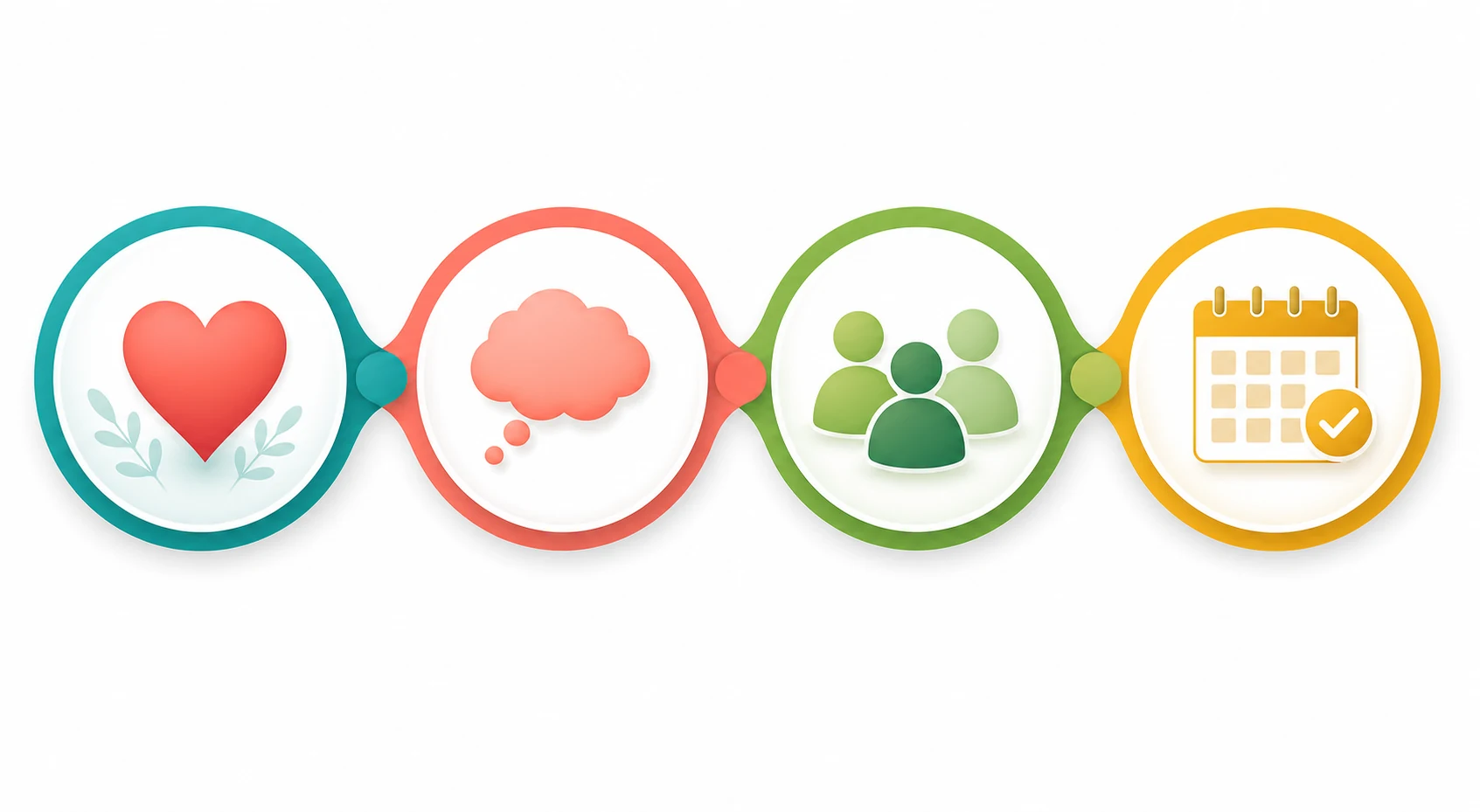
When people ask about four types of mental health, they are often looking for a simple framework. One useful way to organize the topic is through four everyday dimensions:
- Emotional health: how you notice, name, tolerate, and express feelings.
- Psychological health: how you think, focus, make meaning, solve problems, and view yourself.
- Social health: how you connect, communicate, set boundaries, and feel supported.
- Functional health: how your mental state affects sleep, work, study, routines, decisions, and self-care.
These dimensions overlap. For example, chronic stress can affect mood, concentration, sleep, and relationships at the same time. A conflict at work may create emotional tension, social worry, and changes in appetite or energy. That is why mental health is best understood as a pattern, not as one isolated feeling.
If you want a structured way to observe several dimensions at once, an anonymous mental health self-assessment can help you organize your thoughts before you decide what kind of support or reflection might be useful.
What Can Affect Mental Health?
Mental health is shaped by many factors. Biology can play a role, including sleep, hormones, genetics, illness, medications, pain, and brain chemistry. Life experiences matter too, including trauma, loss, discrimination, family stress, work pressure, money worries, caregiving, loneliness, and major transitions.
Lifestyle patterns also influence mental health. Movement, food, substance use, screen habits, rest, sunlight, and routine can support or strain a person’s resources. Social context is just as important. People often cope better when they have safe relationships, practical help, cultural belonging, and access to care.
None of these factors works in isolation. Mental health is often the result of the balance between demands and resources. A demanding season may be manageable when sleep, support, and meaning are strong. The same demands may feel crushing when someone is isolated, exhausted, or already dealing with grief or physical illness.
This is why responsible mental health education avoids blaming the person. Improving mental health is not just about trying harder. It may involve changing routines, reducing overload, asking for help, treating physical concerns, building skills, improving safety, or finding professional support.
Why Mental Health Is Important
Mental health is important because it affects how people experience daily life. It influences attention, memory, motivation, communication, problem-solving, patience, creativity, and the ability to recover after stress. It also affects physical health through sleep, inflammation, appetite, energy, and health behaviors.
Good mental health does not make life easy, but it can make life more workable. It helps people notice stress before it becomes overwhelming, make choices that match their values, maintain relationships, and participate in work, study, parenting, friendship, and community life.
Mental health is also important because stigma can keep people silent. When the definition of mental health is framed as ordinary well-being rather than personal weakness, it becomes easier to talk about stress, ask for support, and respect other people’s experiences.
When Mental Health May Need Extra Support
It may be time to seek extra support when emotional distress, worry, low mood, irritability, sleep problems, avoidance, substance use, or relationship conflict begins to interfere with daily life. It is especially important to reach out promptly if someone feels unsafe, unable to care for basic needs, or at risk of harming themselves or someone else.
A mental health crisis generally means that distress or risk has become urgent enough that immediate support is needed. The exact definition of a mental health crisis can vary by setting, but the practical point is simple: if safety, judgment, or basic functioning feels seriously compromised, use emergency or local crisis resources and contact qualified help.
Educational tools can support reflection, but they cannot evaluate danger, provide emergency care, or understand the full context of a person’s life. If you are unsure whether your situation is urgent, it is safer to contact a healthcare professional, local crisis service, or emergency service in your area.
Using the Definition as a Starting Point
The definition of mental health becomes more useful when you turn it into gentle questions: How have my emotions been lately? How clear or crowded does my thinking feel? Do I feel connected or isolated? Are my routines supporting me or wearing me down? What has changed in my life, body, work, or relationships?
These questions are not meant to label you. They are meant to help you notice patterns. You might write a few observations, talk with someone you trust, adjust one routine, or bring your notes to a professional conversation. For a low-pressure first step, you can explore your current well-being patterns through an educational self-assessment and use the results as one piece of self-reflection.
Mental health is not a single score, a personality label, or a permanent identity. It is a living pattern of emotional, psychological, social, and functional well-being. Understanding that pattern can make it easier to care for yourself and ask for support when support is needed.

FAQ
What is the best definition of mental health?
The best definition of mental health is a broad one: mental health is the emotional, psychological, social, and functional well-being that helps a person cope with life, use their abilities, relate to others, and participate in daily activities. It is not just the absence of mental illness.
What is the definition of mental health in psychology?
In psychology, mental health usually refers to patterns of emotion, thought, behavior, coping, identity, relationships, and functioning. It includes how people interpret experiences, manage stress, regulate emotions, make choices, and maintain connection with others.
What is a simple definition of mental health?
A simple definition of mental health is your ability to think, feel, relate, and act in ways that support daily life and well-being. This short definition is useful because it includes both inner experience and outward functioning.
What are four types of mental health?
People often use the phrase four types of mental health to mean four dimensions: emotional, psychological, social, and functional well-being. These are not strict categories, but they help explain how feelings, thoughts, relationships, and routines work together.
What is the CDC definition of mental health?
The CDC describes mental health as part of behavioral health and includes emotional, psychological, and social well-being. In everyday terms, it affects how people think, feel, handle stress, relate to others, and make choices.
What is the difference between mental health and mental illness?
Mental health is the broader state of well-being everyone has. Mental illness refers to specific health conditions that involve significant changes in emotion, thinking, behavior, or functioning. A person can struggle with mental health without having a specific condition, and a person with a condition can still have many areas of strength.
Why is mental health important?
Mental health is important because it shapes daily functioning, relationships, physical health, learning, work, decision-making, and resilience. It also affects whether people feel able to ask for help and use support before stress becomes overwhelming.