Is Depression a Disability? Rights, Benefits, and Work Limits Explained
Is depression a disability? The practical answer is: it can be, but the label depends on context. Depression may be treated as a disability when it substantially limits everyday activities, work capacity, concentration, sleep, communication, or self-care. A benefit program, workplace accommodation process, school policy, veterans claim, or national equality law may each use a different test. If you are trying to understand how low mood, loss of interest, fatigue, or withdrawal affects your daily life, a structured psychology self-assessment can help you organize observations before speaking with a qualified professional.

When Depression May Count as a Disability
Depression is a mental health condition, but disability status is usually about functional impact. A person can have depressive symptoms and not meet a disability definition for a specific program. Another person may have the same condition name but experience severe, long-lasting limitations that affect work, relationships, basic routines, or safety planning.
In many U.S. workplace contexts, the Americans with Disabilities Act focuses on whether a physical or mental impairment substantially limits one or more major life activities. Those activities can include concentrating, sleeping, interacting with others, working, caring for oneself, and regulating emotions. This is why major depression, persistent depressive disorder, bipolar depression, and depression related to another medical condition may sometimes be protected.
For Social Security disability programs, the question is usually narrower. A person generally has to show that symptoms and functional limitations are severe enough to prevent substantial work activity for the required duration. The Social Security mental disorder listings include depressive, bipolar, and related disorders. The agency looks for medical evidence plus limitations in areas such as understanding and applying information, interacting with others, concentrating and maintaining pace, and adapting or managing oneself.
For veterans benefits, depression can be evaluated under the mental disorders rating schedule when it is service-connected. The percentage assigned is not based only on the name of the condition. It is tied to occupational and social impairment, including the frequency, severity, and duration of symptoms.
A Diagnosis Is Not the Whole Test
Many people search for "depression is a disability" hoping for a simple yes or no. The more useful question is: what does depression make harder, how often, for how long, and with what support?
Decision makers often look for patterns such as:
- trouble sustaining attention, pace, or follow-through
- repeated missed work, reduced productivity, or inability to complete ordinary tasks
- marked social withdrawal or difficulty interacting with others
- disrupted sleep, appetite, energy, or daily hygiene
- difficulty adapting to changes, stress, deadlines, or public-facing tasks
- treatment history, therapy notes, medication records, or clinician letters
- statements from people who have directly observed the functional impact
The condition name matters because it tells reviewers what category they are evaluating. The lived impact matters because disability systems are built around limitations, not labels alone. A clinician, benefits advocate, attorney, HR professional, or school accessibility office may ask for different details depending on the setting.
Depression and Disability at Work
Depression can be a disability at work when it substantially limits major life activities and the employee is otherwise qualified for the job. Workplace protection is not the same as automatic leave, automatic approval of every requested change, or protection for all performance issues. It usually means the employer should not discriminate because of the condition and may need to consider reasonable accommodations.
Reasonable accommodations are changes that help a qualified employee perform essential job functions. For depression, examples can include a modified schedule, quieter workspace, written instructions, flexible break timing, occasional leave for treatment, remote work when it fits the role, adjusted supervision style, or temporary workload changes. The right accommodation depends on the job, the limitation, and whether the change creates undue hardship.
Employees usually do not need to share every private detail. In many situations, a person can say they need a change because of a medical condition and provide documentation that explains functional limits. If you are unsure what to disclose, it is often wise to ask HR or a qualified advisor about the process before sharing sensitive details widely.
A SCL-90 based self-reflection tool cannot decide workplace eligibility, but it may help you notice patterns in mood, sleep, interpersonal sensitivity, anxiety, and distress that are worth discussing with a professional.
Social Security, SSI, SSDI, and Depression
In the United States, people often ask whether depression qualifies for SSI or SSDI. The answer depends on program rules, medical evidence, work history, income and asset rules for SSI, and the extent of functional limitations.
For Social Security disability evaluation, depression is considered under mental disorder standards, but approval is not based on saying "I have depression." Evidence commonly needs to show a medically documented depressive, bipolar, or related disorder and serious limits in mental functioning, or a long-term condition with ongoing treatment and reduced ability to adapt. Reviewers may look at how symptoms affect concentration, social interaction, persistence, daily routines, and the ability to handle stress.
Helpful documentation may include treatment records, medication history, therapy notes, hospital or intensive care records if relevant, work attendance history, statements from clinicians, and descriptions of daily functioning. A short symptom list is usually weaker than a clear record showing how symptoms affect specific tasks over time.
This is also why severe depression, chronic depression, clinical depression, and major depressive disorder can be discussed differently across benefit systems. Severity, duration, treatment response, and work impact are often more important than the everyday wording a person uses to describe being depressed.
VA Disability and Depression
For veterans, depression may be part of a VA disability claim if it is connected to military service or to another service-connected condition. Major depressive disorder and persistent depressive disorder appear within the VA mental disorders rating framework. Ratings can range from noncompensable to total impairment, depending on how symptoms affect occupational and social functioning.
A total rating is not the usual outcome for everyone with depression. The schedule looks at the level of impairment, not only the presence of a mental health condition. Some veterans may receive a lower rating because symptoms are present but controlled or less disruptive. Others may have more serious limitations across work, family relationships, judgment, thinking, mood, and daily functioning.
Because VA claims can be evidence-heavy and fact-specific, veterans often benefit from working with a veterans service officer, accredited representative, or qualified legal professional. Mental health care is also important apart from the claim process itself.
Hidden Disability and Daily Life
Depression is often called a hidden disability because symptoms may not be obvious from the outside. A person may look composed in public while using enormous effort to attend meetings, respond to messages, prepare food, manage hygiene, or keep a stable sleep schedule. Hidden does not mean minor. It means the impact may be easy for other people to miss.
At the same time, not every episode of sadness or stress is a disability. Short-term low mood after a difficult event, ordinary grief, burnout, or temporary work stress may be serious and deserving of care, but disability frameworks usually require substantial and lasting limitations. In the UK, for example, mental health conditions may fall under disability protection when they have a substantial, adverse, long-term effect on normal day-to-day activities. In Canada and other jurisdictions, rules vary by program and province, but many systems also focus on the effects of impairment rather than the label alone.
If depression is affecting safety, daily functioning, or the ability to keep going, it is appropriate to seek timely help from a licensed clinician, local emergency service, or crisis support service. Online information should support action, not replace care.
What To Track Before Asking for Support
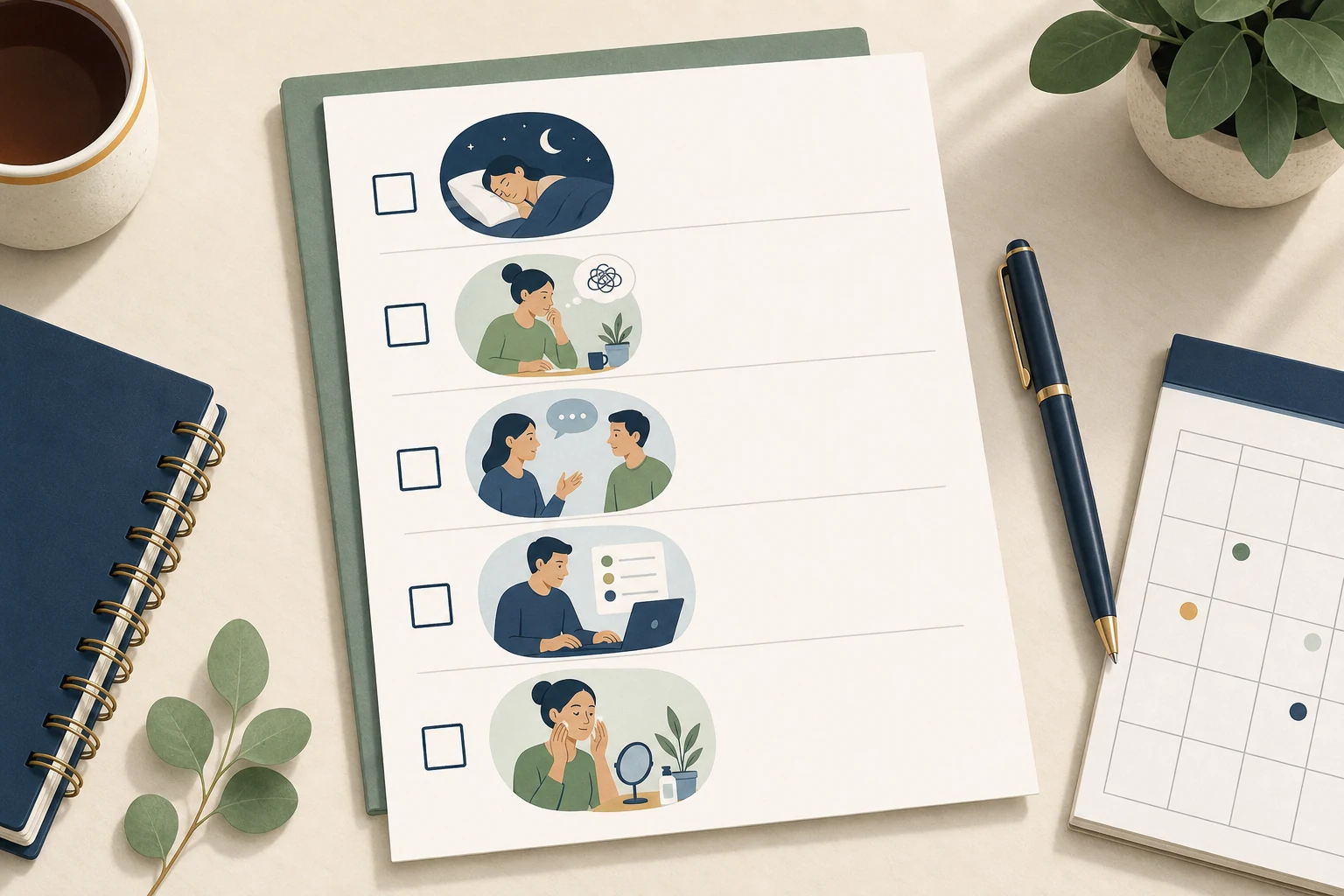
Whether you are preparing for a medical appointment, workplace accommodation discussion, benefits application, or personal reflection, it helps to track concrete patterns. Keep notes simple and factual.
Useful items to record include:
- sleep timing, sleep quality, and daytime energy
- missed work, school, or household responsibilities
- concentration limits, memory lapses, and task completion problems
- social withdrawal or conflict patterns
- appetite, movement, and self-care changes
- treatment appointments, medication changes, and side effects
- what helps, what worsens symptoms, and what support is realistic
Write down examples rather than conclusions. "I could not complete a two-hour shift without a break three times this week" is more useful than "everything is impossible." Specific notes help professionals understand the shape of the problem and may reduce the pressure of explaining everything from memory.
Using Self-Assessment Without Turning It Into a Label
Asking whether depression is a disability can be a practical question about rights, income, work, and support. It can also feel emotionally loaded. Some people fear that calling depression a disability means they are weak or permanently limited. Others feel relief because the word explains why ordinary tasks have become so difficult.
A balanced approach is to separate identity from documentation. Documentation describes support needs. It does not define the whole person. Depression can be serious, treatable, recurring, temporary, chronic, mild, severe, hidden, visible through behavior, or complicated by anxiety, ADHD, trauma, postpartum changes, physical illness, or life stress.
If you want a low-pressure way to organize what you are experiencing, a mental health self-reflection platform can help you observe symptom patterns and prepare better questions for a clinician or support provider. The goal is not to decide your legal status alone. The goal is to build clearer language around mood, functioning, and next steps.

FAQ
Can I go on disability for depression?
Possibly, depending on the program and your evidence. For benefits such as SSI or SSDI, depression usually needs to cause serious, well-documented limits that prevent substantial work activity for the required duration. For workplace accommodations, the standard may focus on whether depression substantially limits major life activities and whether a reasonable change would help you perform essential job duties.
Is depression ever considered a total disability?
Yes, in some systems, but only in severe cases that meet that system's rules. For example, VA mental health ratings can reach a total level when occupational and social impairment is extremely serious. Social Security may approve benefits when depression-related limitations prevent substantial work. A condition name alone is not enough.
What type of depression is considered a disability?
Major depressive disorder, persistent depressive disorder, bipolar depression, postpartum depression, and depression related to another medical condition may be relevant if they substantially limit functioning. The type matters less than the documented severity, duration, treatment history, and effect on daily life or work.
What benefits can I claim for depression?
Potential options depend on your country, employment status, military service, insurance coverage, income, and work history. In the United States, people may explore workplace accommodations, unpaid protected leave in some situations, private short-term or long-term disability insurance, SSI, SSDI, or VA disability if service connection applies. Rules differ, so program-specific advice matters.
Is depression a mental disability or a medical condition?
It can be both. Depression is commonly understood as a mental health condition. It may also be treated as a mental disability when it substantially limits major life activities or work capacity under a specific legal, benefits, education, or employment framework.
Is depression a hidden disability?
It can be. Depression may affect concentration, sleep, energy, self-care, and social interaction even when other people cannot see the effort involved. Hidden disability language can help explain invisible limitations, but support decisions still depend on evidence and the rules of the setting.
Is anxiety and depression a disability?
Anxiety and depression together may qualify as a disability if their combined impact substantially limits major life activities or prevents work under a benefits program's standard. Many people experience overlapping symptoms, so documentation should explain the actual limitations rather than relying only on condition names.