SCL-90 Psychology Test: Guide to 9 Mental Wellbeing Dimensions
Are you on a journey of self-discovery, seeking to better understand the intricate landscape of your own mind? The path to personal growth often begins with a single step: gaining clarity. What is the SCL-90 test and how can it illuminate your mental wellbeing? This comprehensive guide will explore the Symptom Checklist-90 (SCL-90), a respected psychology test designed to offer a detailed snapshot of your psychological state. By understanding its purpose and its nine key dimensions, you can unlock valuable insights to empower your personal development. Ready to begin? You can start your journey here.
What is the SCL-90 Test & Its Purpose?
The SCL-90, or Symptom Checklist-90, is a self-report questionnaire designed to evaluate a broad range of psychological problems and symptoms of psychopathology. It serves as a powerful screening tool that helps individuals identify patterns in their feelings, thoughts, and behaviors over the past week. Think of it not as a diagnosis, but as a detailed map highlighting areas of your emotional and mental landscape that may warrant closer attention. It's a foundational step for anyone looking to engage in meaningful self-reflection and understand their current state of mental wellbeing.

The History and Evolution of the Symptom Checklist 90
To appreciate the SCL-90, it's helpful to understand its roots. Developed by Dr. Leonard Derogatis in the 1970s, the Symptom Checklist 90 emerged from earlier versions as a refined and robust instrument for psychological assessment. Its creation was grounded in extensive clinical research, ensuring that the questions and dimensions were relevant and effective in capturing common psychological distress. Over the decades, it has been widely used by researchers and clinicians, cementing its reputation as a reliable and valid tool for measuring psychological symptoms. This long history provides a foundation of trust and scientific credibility.
Why Consider Taking an Online SCL-90 Psychology Test?
In our fast-paced world, taking time for introspection can be challenging. An online SCL-90 psychology test makes this process accessible, convenient, and completely private. For those curious about their mental state—perhaps you've been feeling more stressed, anxious, or down than usual—it offers a structured way to explore these feelings. Taking a free psychology test can be the first step toward acknowledging your emotional health, identifying potential challenges, and discovering personal strengths you may not have recognized. It provides a private, pressure-free environment to gain self-awareness.
Diving Deep: The SCL-90's 9 Symptom Dimensions Explained
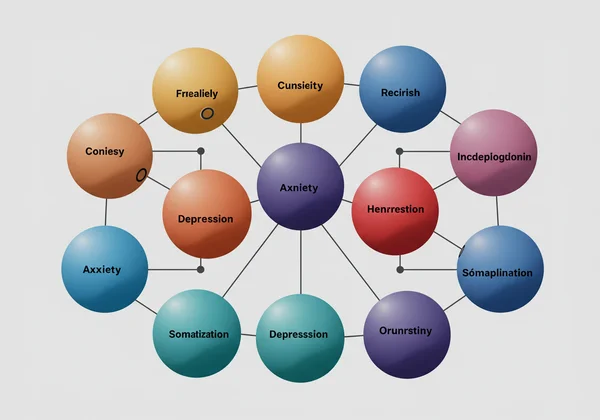
The true power of the SCL-90 lies in its multidimensional approach. It doesn't just give you a single score; it breaks down your experience into nine distinct categories, offering a nuanced view of your mental wellbeing. Let's explore each of the SCL-90 dimensions.
Somatization: Physical Symptoms & Psychological Stress
This dimension measures the distress arising from perceptions of bodily dysfunction. It includes symptoms like headaches, dizziness, nausea, and muscle soreness that are often linked to psychological stress. A high score here might suggest that emotional turmoil is manifesting as physical discomfort. It’s a powerful reminder of the deep connection between mind and body.
Obsessive-Compulsive: Repetitive Thoughts and Behaviors
Here, the focus is on thoughts, impulses, and actions that are persistent, unwanted, and feel difficult to resist. This dimension reflects symptoms characteristic of obsessive-compulsive patterns, such as constant worrying, trouble making decisions, and feeling compelled to repeat certain actions. It highlights the struggle to control intrusive thoughts and behaviors.
Interpersonal Sensitivity: Navigating Social Interactions
This scale assesses feelings of personal inadequacy and inferiority, particularly in social situations. It taps into self-consciousness, uneasiness, and negative expectations about communicating with others. A high score may point to discomfort in social settings and a heightened sensitivity to the judgment of others, whether real or perceived.
Depression: Mood, Motivation, and Energy Levels
Reflecting a broad range of classic depressive symptoms, this dimension covers feelings of hopelessness, low mood, lack of energy, and loss of interest in life's pleasures. It offers a glimpse into your emotional core, assessing the presence of persistent sadness and a bleak outlook that can impact every aspect of daily functioning.
Anxiety: Worry, Tension, and Nervousness
This dimension captures signs of general anxiety, including nervousness, tension, trembling, and feelings of panic. It measures that persistent sense of dread or being "on edge" that can be both mentally and physically exhausting. Understanding your score here can be the first step toward managing worry and finding calm.
Hostility: Anger, Irritability, and Aggression
Hostility relates to thoughts, feelings, and actions that are characteristic of anger. This includes irritability, resentment, aggression, and a tendency to get into arguments. This dimension helps identify underlying anger that may be affecting your relationships and overall sense of peace.
Phobic Anxiety: Specific Fears and Avoidance
This scale measures persistent and irrational fear in response to specific people, places, objects, or situations. It reflects the kind of anxiety that leads to avoidance behaviors, such as a fear of open spaces (agoraphobia) or social situations (social phobia). It pinpoints specific triggers for intense fear.
Paranoid Ideation: Distrust and Suspicion
Paranoid ideation involves disordered thinking characterized by suspicion, fear of losing autonomy, and a sense of being watched or talked about. It assesses feelings of distrust and the belief that others may be trying to take advantage of you. This dimension sheds light on patterns of suspicious thought.
Psychoticism: Unusual Thoughts and Detachment
This scale is designed to identify a range of unusual thoughts and experiences, including feelings of social alienation, withdrawn behavior, and unconventional perceptual experiences. It represents a more schizotypal lifestyle and can indicate a sense of detachment from oneself and the surrounding world.
Interpreting Your SCL-90 Global Severity Index (GSI) & Other Scores
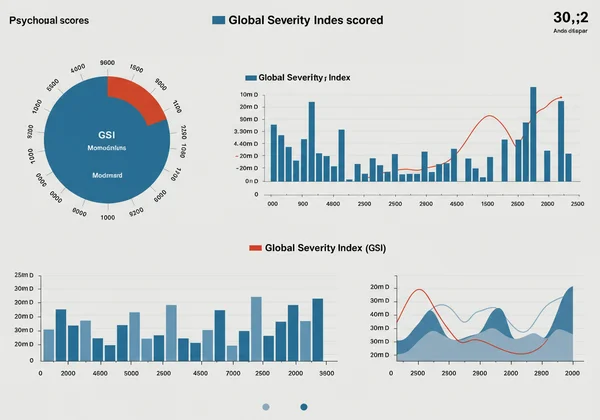
Once you complete the SCL-90, you'll see more than just the nine dimension scores. Several global indices provide a broader overview of your mental state. The most important of these is the Global Severity Index (GSI), which is considered the best single indicator of your current distress level. It's calculated from all 90 items and provides a summary of your overall psychological discomfort. To understand what this and other scores mean, you can explore your results.
What Do High SCL-90 Scores Indicate?
A high score on any of the nine dimensions or the GSI suggests a greater level of distress in that specific area. For example, a high score on the Depression scale may indicate you are experiencing significant depressive symptoms. It’s crucial to remember that a high score is not a diagnosis. Instead, it’s a signal—an invitation to explore that aspect of your life more deeply, perhaps with the help of a professional.
Beyond GSI: Understanding PSDI and PST
Besides the GSI, you might see two other scores. The Positive Symptom Distress Index (PSDI) measures the intensity of your symptoms, reflecting how much you are bothered by the issues you endorsed. The Positive Symptom Total (PST) simply counts the number of symptoms you reported. Together, these scores provide a comprehensive picture of both the breadth and depth of your psychological distress.
Our Platform's Advantage: Accuracy, Privacy & AI Insights
When you're exploring sensitive personal information, the platform you use matters. At PsychologyTest, we are committed to providing a trustworthy and insightful experience, making us the ideal place to take a mental health test. Our approach is built on a foundation of scientific rigor, user privacy, and cutting-edge technology.

Scientifically-Backed Assessments for Reliable Results
Our SCL-90 assessment is rooted in decades of psychological research, ensuring the questions are relevant and the results are reliable. We believe in providing tools that are not just entertaining but genuinely useful for self-reflection. Our commitment to scientific principles means you can trust the insights you receive as you explore your mental landscape.
AI-Powered Deep Dive Reports: Your Personalized Insights
This is where our platform truly stands out. After receiving your initial summary, you have the option to unlock a deep-dive report enhanced by artificial intelligence. Our AI-powered insights go beyond generic summaries, analyzing your unique response patterns to provide personalized feedback, identify potential strengths, and offer actionable suggestions for growth.
Your Privacy Matters: Anonymous & Secure Testing
We understand the importance of privacy. All tests on our platform can be taken completely anonymously. We are committed to protecting your data and ensuring your journey of self-discovery remains secure and confidential. You can explore your feelings with the peace of mind that comes from knowing your privacy is our priority.
Your Journey to Self-Discovery Starts Here with the SCL-90
Understanding yourself is a lifelong journey, and the SCL-90 is a powerful compass to help you navigate it. By breaking down complex psychological symptoms into nine clear dimensions, it provides a structured framework for self-reflection. It empowers you with knowledge, highlights areas for potential growth, and reassures you that you are not alone in your experiences. This is not about labeling yourself; it's about understanding yourself better so you can live a richer, more fulfilling life.
Your path to greater self-awareness is just a click away. Take the next step today and see what you can learn about yourself. Try our free tool and begin your journey.
Common Questions About the SCL-90 Psychology Test
What is the SCL-90 test used for?
The SCL-90 is primarily used as a screening tool to assess a wide range of psychological symptoms and distress. It helps individuals gain insight into their emotional and mental wellbeing across nine key dimensions, making it an excellent starting point for personal growth and self-awareness.
Is an online SCL-90 assessment accurate?
When based on the original, scientifically validated questionnaire, an online SCL-90 is a reliable tool for self-assessment. While it provides valuable insights, it's important to answer the questions honestly. At PsychologyTest, we use a scientifically-backed version to ensure you receive a dependable anonymous mental health test.
What does a high score on any SCL-90 dimension mean?
A high score suggests that you are experiencing a significant level of distress related to that specific dimension (e.g., anxiety, depression). It is not a diagnosis but an indicator that this is an area of your life that may benefit from further attention, reflection, or professional support.
How long does the SCL-90 test take to complete?
The SCL-90 test consists of 90 short questions. Most people find they can complete it in about 15-20 minutes. It's best to set aside a quiet moment where you can reflect on your feelings over the past week without interruptions to ensure your answers are as accurate as possible.
Can the SCL-90 diagnose a mental health condition?
No, and this is a critical point. The SCL-90 is an informational screening tool, not a diagnostic instrument. It cannot and should not be used to diagnose any psychological disorder. The results are for educational and self-exploration purposes only. If you are concerned about your mental health, please consult a qualified healthcare professional for a proper diagnosis and treatment.