Symptom Tracker: A Practical Guide to Tracking Patterns Without Overthinking Them
A symptom tracker is a simple way to turn scattered daily experiences into a clearer record of patterns. Instead of trying to remember whether headaches, low mood, stomach tension, poor sleep, or worry felt worse last week, you write down what happened, when it happened, and what else was going on. For people exploring stress, emotional changes, or body-based tension, a tracker can work alongside a free psychology self-assessment as an educational self-reflection tool. It is not a clinical conclusion, but it can help you notice themes, prepare better questions, and speak more clearly with a qualified professional when needed.
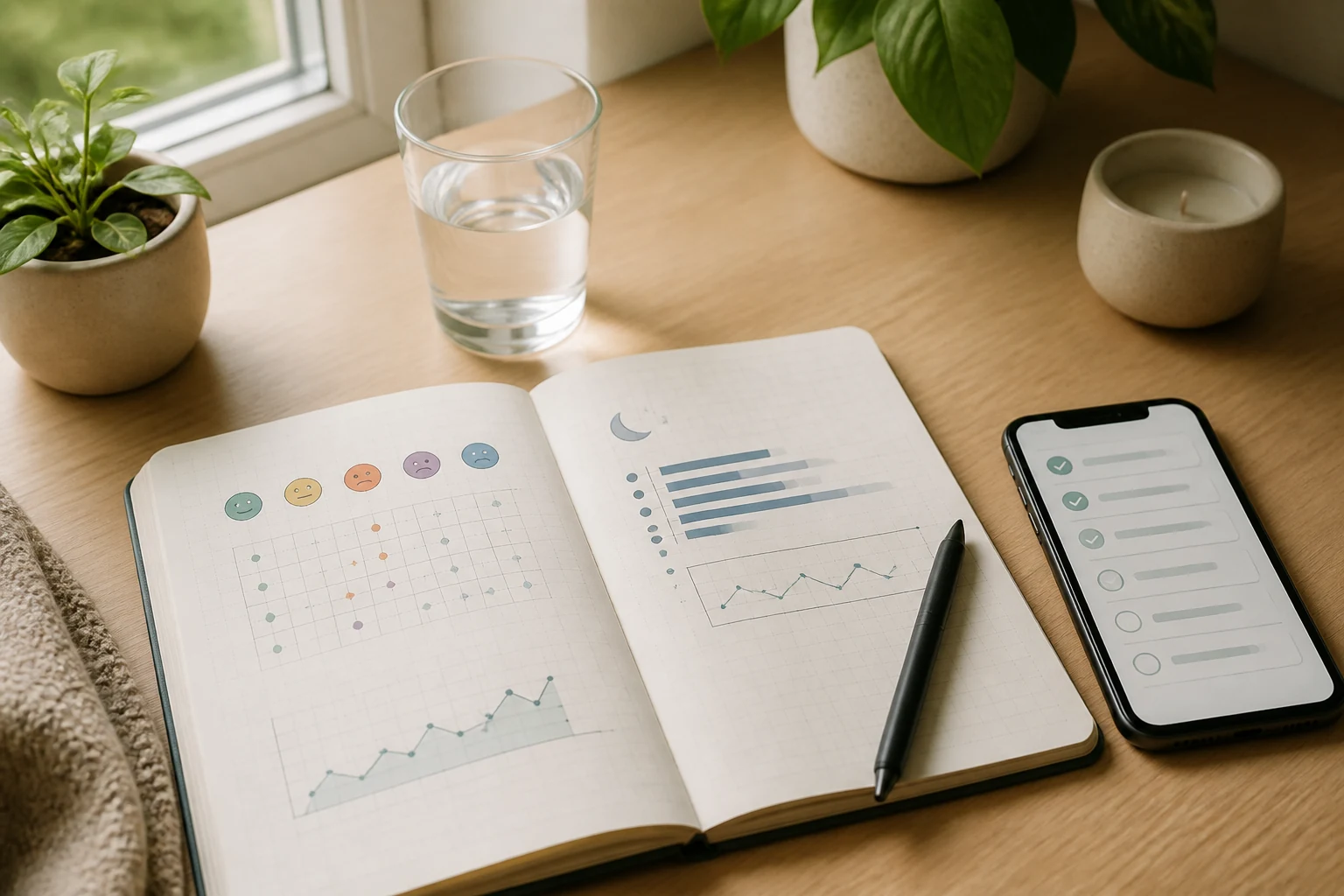
What a Symptom Tracker Actually Does
A symptom tracker records repeated experiences over time. It may be a paper symptom tracker template, a spreadsheet, a symptom tracker app, or a printable symptom tracker PDF. The format matters less than the habit: short entries, consistent categories, and enough detail to compare one day with another.
The most useful trackers usually capture five things. First, they name the symptom in plain language, such as "tight chest feeling," "racing thoughts," "nausea," or "difficulty concentrating." Second, they record timing: date, time of day, duration, and whether the symptom came and went. Third, they include intensity, often on a 0 to 10 scale. Fourth, they add context, such as sleep, meals, caffeine, exercise, social stress, work pressure, menstrual cycle, medication changes, or alcohol use. Fifth, they note what helped, what did not help, and whether professional care was contacted.
That structure makes the tracker different from a list of symptoms checker. A list can help you name possible signs, but tracking adds sequence and context. It helps answer questions like: Does this happen after poor sleep? Is the symptom becoming more frequent? Are several symptoms clustering around the same stressor? Does a coping strategy seem to reduce intensity?
Symptom Tracker vs. Multiple Symptom Checker
Search terms such as multiple symptom checker, free symptom checker, and free multiple symptom checker usually point to tools that ask for several symptoms and then provide educational possibilities or care guidance. A symptom tracker has a different purpose. It does not try to sort your symptoms into a condition. It preserves your own timeline so you can understand patterns more calmly.
Both can be useful when used carefully. A checker may help someone learn what categories of health information might be relevant. A tracker may help them remember what happened before, during, and after a difficult episode. For mental health and stress-related self-observation, the tracker is often less overwhelming because it focuses on your lived pattern rather than a long list of possible explanations.
This distinction is especially important if you are searching phrases like "what sickness do I have" or "check my symptoms online." Online tools can miss context, and symptoms can have many explanations. If your concern feels urgent, severe, sudden, or unsafe, do not wait for an online tool or a perfect record. Use local emergency care or contact a qualified healthcare professional.
A Simple Symptom Tracker Template
You do not need a complicated system. A useful symptom tracker template can fit on one page and take two minutes per entry. Try these columns:
| Field | What to Write |
|---|---|
| Date and time | When the symptom started or when you noticed it |
| Symptom | A plain-language description |
| Intensity | 0 to 10, or mild, moderate, strong |
| Duration | Minutes, hours, all day, or recurring |
| Context | Sleep, food, stress, activity, mood, environment |
| Response | Rest, breathing, hydration, movement, support, care contacted |
| Notes | Anything unusual or worth asking about |
Keep the wording simple. "Felt tense before meeting" is often more useful than a technical label you are unsure about. If you are tracking several experiences, use separate rows rather than squeezing everything into one paragraph. That makes it easier to see whether symptoms rise together or appear in separate situations.
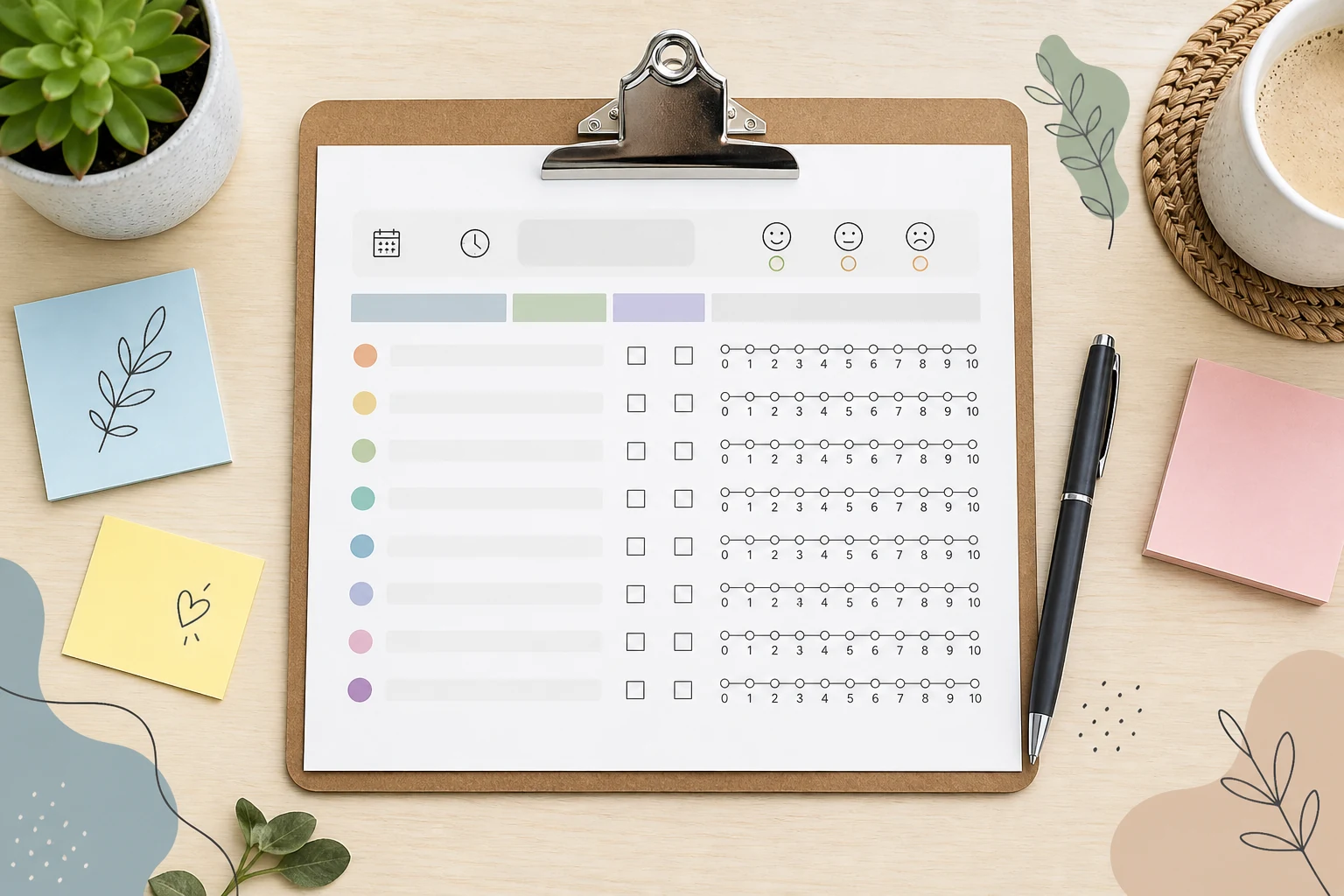
Choosing a Symptom Tracker App, PDF, or Notebook
The best symptom tracker is the one you will actually use. A symptom tracker app is convenient if you want reminders, graphs, search, or the ability to export notes. A symptom tracker PDF works well if you prefer printing a weekly sheet, keeping it private in a folder, or bringing it to an appointment. A notebook can be best if writing by hand helps you slow down.
When choosing a format, look for friction. If the app asks too many questions, you may avoid it. If a PDF has too little space, you may stop using it. If a notebook turns into a long journal entry every time, you may lose the quick pattern view. The sweet spot is a format that captures enough information without making every symptom feel like a project.
Privacy also matters. Before using any health tracker application, review what data it stores, whether you can export or delete entries, and whether it shares information with third parties. For sensitive mental health notes, a local notebook or password-protected document may feel safer than an unfamiliar app.
How to Track Mental and Physical Symptoms Together
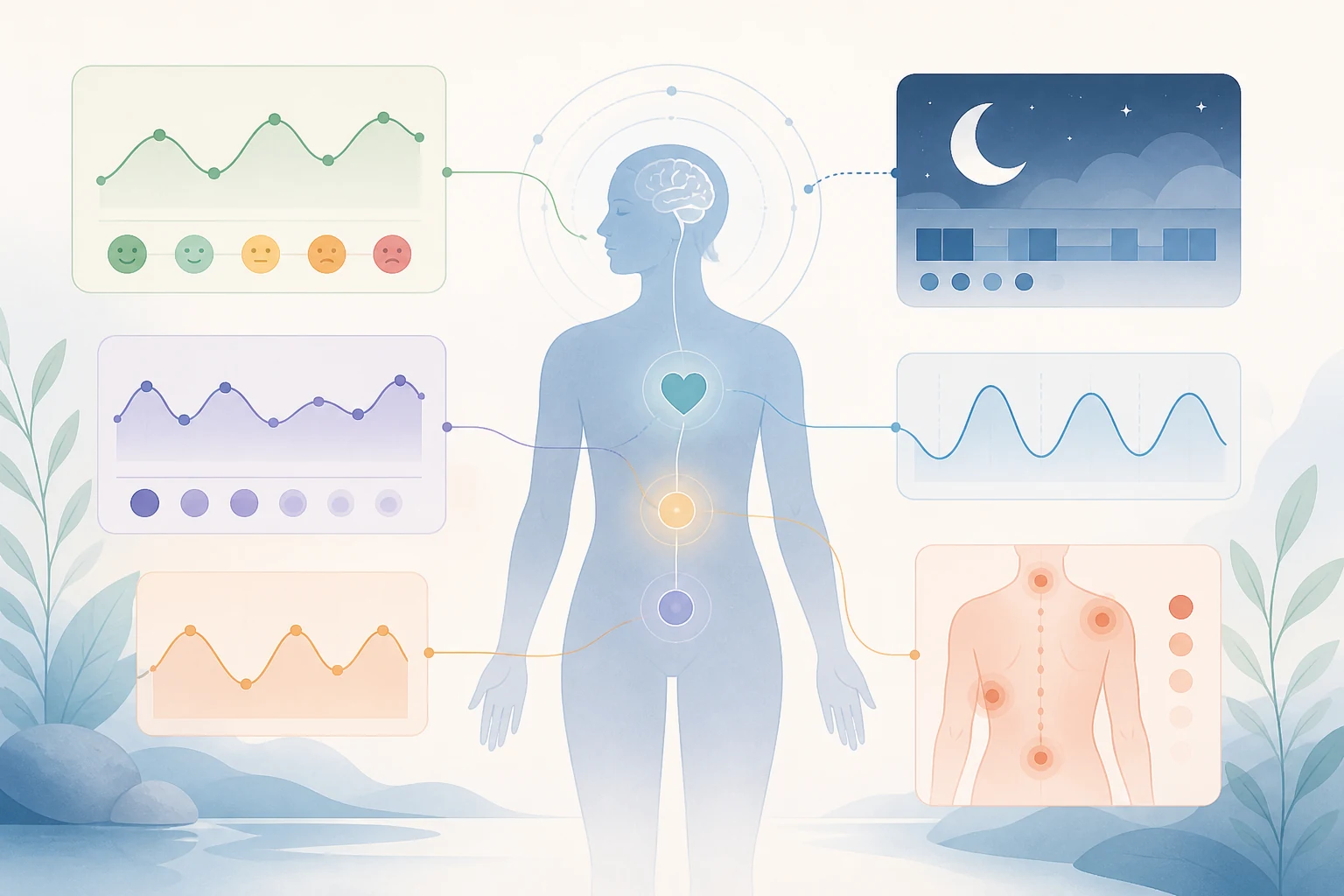
Many people separate "physical symptoms" from "emotional symptoms," but real life is often messier. Stress can show up as stomach tension, headaches, muscle tightness, sleep disruption, irritability, or difficulty focusing. Physical discomfort can also affect mood, patience, and social energy. A tracker helps you observe both without assuming one simple cause.
For example, you might track sleep quality, anxiety level, appetite, body tension, and concentration on the same daily line. Over two weeks, you may notice that poor sleep appears before irritability, or that headaches rise after long screen-heavy workdays. These observations are not proof of cause, but they can guide better questions.
This is where structured reflection can complement broader psychology tools. PsychologyTest.net centers on SCL-90-informed self-report assessment and educational interpretation, which can help users explore dimensions such as somatic discomfort, anxious feelings, low mood, and interpersonal sensitivity. A tracker adds day-to-day detail around those patterns, while structured self-reflection tools can help you think about the wider picture.
Signs That Tracking Should Not Wait
A tracker is helpful for patterns, but some symptoms need prompt attention rather than ongoing observation. Seek urgent local medical help for severe chest pressure, trouble breathing, fainting, sudden weakness or numbness, sudden confusion, severe injury, heavy bleeding, or any symptom that feels immediately unsafe. If you may harm yourself or someone else, contact emergency services or a crisis support line in your area.
For non-urgent but persistent concerns, consider contacting a healthcare or mental health professional when symptoms interfere with sleep, work, school, relationships, eating, safety, or daily functioning. Also reach out if symptoms are new, worsening, recurring, or difficult to explain. A symptom tracker can support that conversation by giving concrete examples: when it started, how often it happens, what intensity feels like, and what context surrounds it.
This is also the safest way to think about "best free symptom checker" searches. A reputable tool may provide general education, but it cannot know your full history, physical examination, lab results, current medications, or personal risk factors. Your record is a conversation aid, not the final answer.
Turn Your Symptom Tracker Into Better Self-Reflection
After one or two weeks, review your entries without judging yourself. Look for frequency, intensity, clusters, triggers, and relief patterns. Ask: Which symptoms appear most often? Which ones disrupt life the most? What tends to happen before a difficult day? What seems to help even a little? What question would I ask a professional if I had ten minutes to explain this clearly?
Then turn the record into a short summary. A strong summary might say: "For the past two weeks, I noticed stomach tension and racing thoughts most often on work mornings. Intensity ranges from 4 to 7. Poor sleep seems to make it worse. Walking after lunch helped twice." That kind of summary is more useful than a vague memory of feeling bad.
If your goal is personal growth, pair tracking with gentle interpretation. You can explore an anonymous mental health self-check to reflect on broader psychological patterns, then use your tracker to notice what daily contexts support or strain your wellbeing. Keep the tone curious, not accusatory. The aim is clarity, not self-labeling.

FAQ
What is the best symptom tracker?
The best symptom tracker is a format you can use consistently. For some people, that is a simple notebook. For others, it is a symptom tracker app with reminders and export options. A good tracker should let you record symptom name, time, intensity, duration, context, and what helped without making the process feel heavy.
What is the best free symptom checker?
A free symptom checker may be useful for basic education, especially if it comes from a reputable health organization and clearly explains its limits. Still, it should not replace professional care. If you use one, answer honestly, read the safety guidance, and bring unresolved or concerning symptoms to a qualified clinician.
Can I track multiple symptoms at once?
Yes. A multiple symptom tracker can be helpful when experiences overlap, such as sleep problems, low energy, stomach tension, headaches, and anxious thoughts. Use separate rows or categories so you can see which symptoms cluster together and which appear independently.
Is a symptom tracker PDF better than an app?
Neither is automatically better. A symptom tracker PDF is easy to print, simple to keep private, and useful for appointments. An app may be better for reminders, graphs, and searching entries. Choose the one that makes consistent tracking easier for your real routine.
How long should I track symptoms before reviewing patterns?
For everyday, non-urgent concerns, one to two weeks can reveal early patterns. A month may show stronger trends, especially for sleep, stress, menstrual cycle, workload, or recurring mood changes. If a symptom is severe, sudden, unsafe, or rapidly worsening, seek appropriate care rather than waiting to complete a tracker.
Should I use Mayo Clinic, WebMD, or another multiple symptom checker?
Many people compare well-known symptom checker tools because they want reputable health information. The safest approach is to use any checker as a general education tool, read its limitations, and avoid treating the result as a final answer. A tracker can still help by preserving your timeline for a professional conversation.