Understanding the SCL-90 Psychology Test: Your Guide to 9 Symptom Dimensions
Many of us wonder about our feelings, thoughts, and behaviors, seeking a deeper understanding of ourselves. If you're looking for a structured way to gain insight, a powerful psychology test can serve as your compass. But what is the SCL-90 test? This guide will illuminate one of the most respected tools in psychological screening—the Symptom Checklist-90 (SCL-90)—and show you how it can unlock a deeper understanding of your mental well-being. Ready to begin? You can start your journey with a free assessment today.
What is the SCL-90 Test & Why Take It?
The Symptom Checklist-90 (SCL-90) is a widely used self-report questionnaire designed to evaluate a broad range of psychological problems and symptoms of psychopathology. Think of it as a comprehensive emotional and mental health check-up. It doesn't diagnose conditions, but it highlights areas that might need your attention, providing a detailed snapshot of your subjective experience over the past week. By answering 90 simple questions, you can gain valuable insights into your emotional patterns.

A Brief History and Purpose of the Symptom Checklist 90
Developed by Dr. Leonard Derogatis, the SCL-90 has its roots in clinical psychology and has been refined over decades. Its purpose is to efficiently screen for a wide array of psychological symptoms. This isn't a trendy online quiz; it's a scientifically validated instrument used by researchers and clinicians worldwide to measure psychological distress. Its longevity and widespread use are a testament to its reliability and utility in creating a comprehensive psychological evaluation.
Who Can Benefit from an SCL-90 Assessment?
The beauty of the SCL-90 is its versatility. It's not just for those experiencing significant distress.
- The Growth Seeker: If you're a student, a young professional, or anyone passionate about personal development, the SCL-90 can reveal your emotional strengths and challenges, guiding your growth.
- The Curious Explorer: For those with a general interest in psychology, this test offers a fascinating, hands-on look at how psychological symptoms are measured and understood.
- The Professional: Educators and HR specialists can use the framework to better understand the well-being of their teams and students, fostering a more supportive environment.
Understanding the SCL-90: The 9 Primary Symptom Dimensions
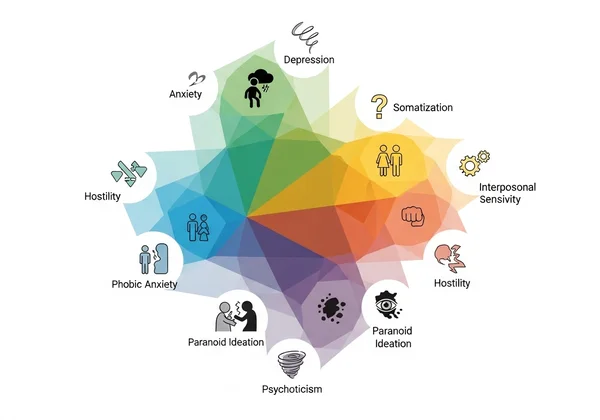
The SCL-90 organizes your responses into nine primary symptom dimensions and three global indices. This structure provides a nuanced picture of your well-being. Let's explore what each of these nine dimensions represents.
Somatization (SOM): Exploring Bodily Discomforts
This dimension focuses on distress arising from perceptions of bodily dysfunction. It includes symptoms like headaches, dizziness, nausea, and muscle soreness that lack a clear physical cause. A high score here may suggest a strong connection between your emotional state and your physical feelings, a key area for exploring the mind-body connection.
Obsessive-Compulsive (OC): Unraveling Repetitive Thoughts & Behaviors
This scale measures symptoms characteristic of obsessive-compulsive patterns. It reflects thoughts, impulses, and actions that are persistent, unwanted, and difficult to resist. This isn't just about being neat; it's about experiencing intrusive cognitive patterns that feel beyond your control.
Interpersonal Sensitivity (IS): Navigating Social Interactions
Interpersonal Sensitivity relates to feelings of personal inadequacy and inferiority, particularly in social situations. It taps into self-consciousness, unease, and negative expectations concerning interpersonal relationships. Understanding this dimension can be the first step toward building social confidence.
Depression (DEP): Understanding Mood & Despondency
This dimension captures a wide range of common depression signs. It includes symptoms like a lack of interest, low motivation, feelings of hopelessness, and thoughts of worthlessness. The SCL-90 helps quantify the level of these feelings, providing a clearer picture of your current mood state.
Anxiety (ANX): Recognizing Nervousness & Apprehension
Anxiety is more than just stress. This scale measures classic anxiety symptoms such as nervousness, tension, trembling, and feelings of panic. It helps identify both generalized anxiety and more acute physical manifestations of fear and apprehension.
Hostility (HOS): Examining Thoughts of Aggression & Anger
The Hostility dimension assesses thoughts, feelings, and behaviors related to anger, irritability, resentment, and aggression. It provides insight into how you process and experience anger, which is a crucial component of emotional wellbeing.
Phobic Anxiety (PHOB): Identifying Specific Fears & Avoidance
This scale measures persistent and irrational fear responses to specific people, places, objects, or situations. The core component is avoidance behavior linked to these specific phobias, making it a distinct form of anxiety.
Paranoid Ideation (PAR): Perceiving Mistrust & Suspiciousness
Paranoid Ideation explores a disordered mode of thinking characterized by suspicion, fear of losing autonomy, and mistrust. This scale measures projective thoughts, hostility, and a general sense that others may be untrustworthy.
Psychoticism (PSY): Exploring Unusual Perceptual & Thought Patterns
This dimension is designed to represent a sense of isolation and alienation. It includes symptoms that are often considered indicators of more severe psychological distress, such as unusual thought patterns or perceptual experiences. It's a broad scale that can point to a feeling of being disconnected from oneself or reality.
Beyond the 9 Dimensions: Understanding Symptom Severity
While each dimension offers specific insights, the real power of the SCL-90 comes from seeing how they interrelate. A high score in one area may influence another. To get the full picture, you can take the free test and receive an AI-powered report that analyzes these connections for you.
Global Indices: GSI, PSDI, and PST Explained
Beyond the nine dimensions, the SCL-90 calculates three global indices that provide a summary of your overall mental state.
Global Severity Index (GSI): Your Overall Distress Level
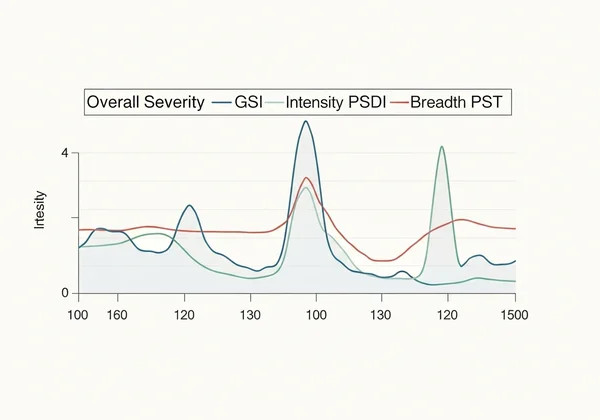
The GSI is the single best indicator of your current distress level. It combines information about the number of symptoms you've reported and the intensity of that distress. It provides a quick, reliable measurement of your overall psychological well-being.
Positive Symptom Distress Index (PSDI): Intensity of Symptoms
The PSDI is a pure measure of symptom intensity. It averages the scores of the symptoms you did report, giving you a sense of how distressing those specific symptoms are. This helps differentiate between having many mild symptoms versus a few very intense ones.
Positive Symptom Total (PST): Number of Symptoms Reported
The PST is simply the total count of symptoms you indicated having experienced. It gives a straightforward measure of the breadth of your symptomatology. A high PST suggests you are experiencing a wide variety of symptoms.
Interpreting Your SCL-90 Scores: What Do They Mean for You?
Receiving your results is the first step. The next is understanding them. So, how to interpret SCL-90 results? Your scores are valuable clues on your self-discovery journey.
How SCL-90 Scores Are Calculated and Presented
On our platform, your answers are instantly analyzed. The platform calculates your score for each of the nine dimensions and three global indices. While a simple score is useful, our unique advantage is the AI-powered deep dive report. This report goes beyond numbers, offering personalized insights, identifying potential strengths, and providing actionable suggestions based on your unique response pattern. It translates complex data into clear, supportive guidance. To see how it works, explore your results now.
When to Seek Professional Guidance After Your Test
Critically important: the SCL-90 is a screening tool, not a diagnostic instrument. It cannot tell you if you have a clinical disorder. Its purpose is to promote mental health awareness and provide a starting point for self-reflection. If your results, particularly the Global Severity Index (GSI), are high or if any dimension causes you concern, it is a strong signal that speaking with a qualified mental health professional could be beneficial. Think of this test as a way to gather information to share with a doctor or therapist.

Empowering Your Journey: Next Steps After Your SCL-90 Test
Understanding the architecture of the SCL-90—its nine dimensions and three global indices—demystifies the process of psychological assessment. It’s not about labeling yourself but about gaining a structured, evidence-based perspective on your inner world. This knowledge empowers you to take proactive steps toward personal growth and greater emotional balance.
Your journey to a richer life begins with deeper self-awareness. The SCL-90 is an excellent tool to facilitate that process. If you're ready to take the next step, visit PsychologyTest to take our free, anonymous, and scientifically-backed SCL-90 test. Unlock your AI-powered report and turn insight into action.
Frequently Asked Questions About the SCL-90 Test
What is the SCL-90 test designed to measure?
The SCL-90 is designed to measure psychological distress across nine primary symptom dimensions: Somatization, Obsessive-Compulsive, Interpersonal Sensitivity, Depression, Anxiety, Hostility, Phobic Anxiety, Paranoid Ideation, and Psychoticism. It also provides three global scores for an overall assessment of well-being.
How accurate are online SCL-90 psychology tests?
The accuracy depends on the quality of the test and its adherence to the original, validated instrument. At PsychologyTest, our assessment is based on the established scientific framework of the SCL-90, ensuring its reliability. While highly informative, remember that an online test is a screening tool and cannot replace a formal diagnosis from a healthcare professional. For an accurate self-assessment, try our psychology test.
What does a high score on an SCL-90 dimension indicate?
A high score on a specific dimension, such as Depression or Anxiety, indicates that you have reported experiencing symptoms related to that area with more frequency or intensity than the general population. It doesn't mean you have a disorder, but rather that this is an area of your emotional life that may warrant further attention and self-exploration.
Is the SCL-90 test a diagnostic tool?
No, absolutely not. This is a crucial distinction. The SCL-90 is a screening instrument that highlights potential areas of concern and provides a snapshot of your current psychological state. A formal diagnosis can only be made by a qualified mental health professional, such as a psychologist or psychiatrist, after a comprehensive clinical evaluation.
How do I know if I need to take a psychology test like the SCL-90?
Anyone curious about their mental and emotional landscape can benefit from taking the SCL-90. You don't need to be in crisis. If you're seeking personal growth, trying to understand recurring feelings, or are simply interested in the principles of psychology, taking a free SCL-90 test is a confidential and enlightening first step.