Psychometric Test Guide: Questions, Examples, and Preparation Tips
A psychometric test is a structured assessment that measures patterns in thinking, behavior, preferences, or problem solving. People often meet these tests in recruitment, education, coaching, or personal development settings, but the phrase can feel broader than it first appears. A job applicant may face timed numerical reasoning, a student may complete an ability assessment, and a person exploring self-understanding may answer reflective psychology questions. This guide explains what psychometric tests usually include, how sample questions work, what free online options can and cannot tell you, and how to prepare calmly. For a broader self-reflection starting point, PsychologyTest.net offers structured psychology self-assessment tools designed for personal insight rather than clinical decision making.

What Is in a Psychometric Test?
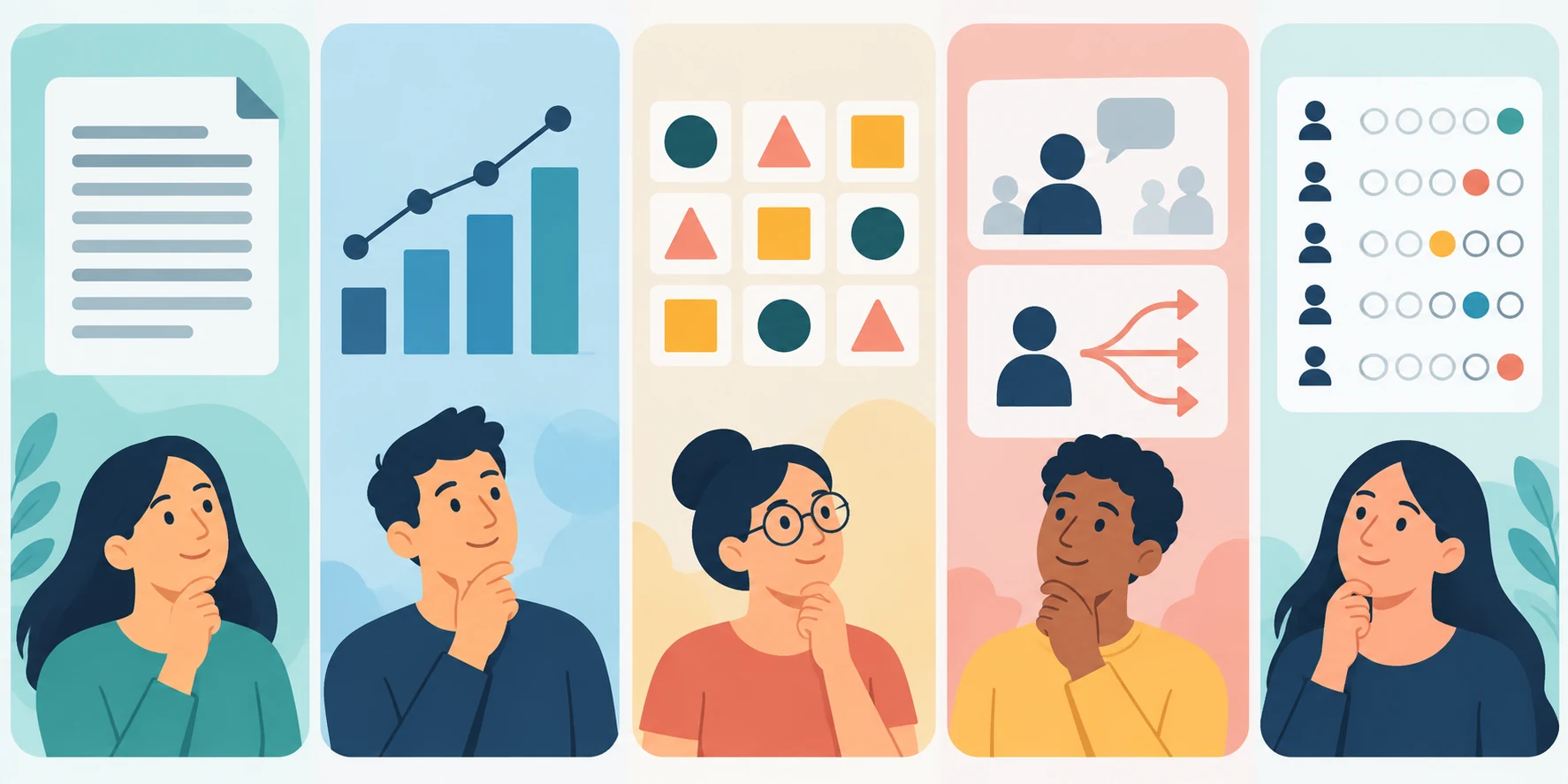
Most psychometric tests are built around a defined construct: a skill, trait, ability, preference, or behavior pattern that the assessment is trying to measure. The format depends on the purpose. Some tests use right-or-wrong answers, such as verbal reasoning, numerical reasoning, abstract reasoning, or spatial reasoning. Others use rating scales, ranking choices, or scenario responses to understand work style, motivation, personality, emotional patterns, or situational judgment.
In hiring, psychometric testing often helps employers compare candidates in a standardized way. In education, a psychometric test for students may support learning discussions, placement decisions, or career exploration. In personal growth, a psychology assessment can help someone organize observations about mood, stress, relationships, and habits. These uses overlap, but they are not identical. A recruitment test usually focuses on job-relevant performance signals, while a self-reflection assessment focuses on understanding patterns and next steps.
A well-designed psychometric assessment usually includes clear instructions, consistent timing or response rules, a scoring method, and interpretation guidance. A number without context can feel more precise than it really is, especially when stress, fatigue, language, disability, or unfamiliar test format affects performance.
Common Types and Examples of Psychometric Tests
Psychometric tests fall into several common families. Knowing the family helps you understand what the questions are asking for and how to practice.
Verbal reasoning tests ask you to read short passages and decide what follows from the information given. You may see answer options such as true, false, or cannot say. The goal is not general opinion; it is careful reading under constraints.
Numerical reasoning tests use tables, charts, percentages, ratios, currency, or workplace-style data. A psychometric test sample in this category might ask which department had the largest percentage increase or whether a sales target was met. The math is often not advanced, but the time pressure can make accuracy harder.
Abstract, logical, and spatial reasoning tests use patterns, shapes, sequences, rotations, or rules. These are common in aptitude assessment because they can measure problem solving without relying heavily on specialized knowledge.
Situational judgment tests present a realistic scenario and ask what you would do. They are common in recruitment testing because they look at judgment, communication, priorities, and workplace behavior.
Personality and work-style questionnaires usually have no single correct answer. They ask about typical preferences, motivations, values, reactions, or behavior patterns. For these, consistency and honest self-description are more useful than trying to guess an ideal profile.
Psychometric Test Questions and Answers: How Samples Work
People search for psychometric test questions and answers because they want to know what the experience will feel like before the real assessment. That is reasonable. Sample questions can teach you the rhythm of a test: how instructions are phrased, how distractor answers work, and how quickly you need to move.
However, a sample question is not a promise that the real test will use the same content. In a verbal reasoning sample, the correct answer should come only from the passage, not from outside knowledge. In a numerical sample, the answer should follow from the data provided, not from assumptions about the business. In an abstract reasoning sample, the answer depends on identifying the rule that changes from one item to the next.
When using a psychometric test PDF or sample questions with answers PDF, treat the answer explanation as the most valuable part. Ask yourself why the correct answer is correct and why the tempting wrong answer is wrong. If the explanation is missing, the sample may still help with familiarity, but it will do less to improve reasoning.
For personality-style samples, avoid memorizing "best" answers. The purpose is usually to understand stable preferences or work tendencies. Overly strategic answering can create an inconsistent profile and may leave you with feedback that is less useful for reflection.
Psychometric Test Online Free: What to Expect
A free psychometric test online can be useful when your goal is orientation, practice, or self-reflection. It can show you the structure of common aptitude items, introduce timed conditions, or help you notice which question styles feel harder. For students, free samples can reduce uncertainty before school, internship, or graduate assessment processes.
The limitation is that free tests vary widely. Some are educational practice tools. Some are short entertainment quizzes. Some are previews for paid preparation packages. A free online score may not be normed against the same group, timed in the same way, or interpreted by the same scoring model as a formal recruitment assessment.
That is why it helps to separate three goals. If you want practice, choose samples with worked explanations. If you want self-understanding, choose tools that explain limitations and encourage reflection. If you need an official result for a school, employer, or professional process, use the assessment route they specify.
PsychologyTest.net's personal growth assessment approach is closer to reflective self-understanding than job screening. It can help you think about patterns in thoughts, feelings, and behaviors, but it should not be treated as a substitute for professional support when concerns are serious or persistent.
Psychometric Test Price: Free, Paid, and Official Options
Psychometric test price depends on the purpose. Free practice tests may cost nothing because they introduce common formats or support basic preparation. Paid preparation platforms may charge for larger question banks, detailed explanations, progress tracking, or employer-specific practice. Official assessments used by employers, schools, or clinicians may be paid for by the organization, bundled into an application process, or administered through a professional service.
Price alone does not prove quality. A useful test should be clear about what it measures, how results are interpreted, and what the user should do with the information. Before paying, check whether an employer, university career service, school, or library already provides practice materials, and make sure the package matches the test type you will face.
How to Prepare for a Psychometric Test
Preparation works best when it is specific, calm, and repeatable. Start by finding out what type of assessment you will take: verbal, numerical, logical, situational judgment, personality, or a mixed battery. If the invitation names a provider, read the official instructions carefully. If it names only the test family, practice that family rather than jumping between unrelated formats.
Use short timed sessions first. A 15-minute practice block can reveal whether your main issue is comprehension, calculation, pattern recognition, pacing, or nervousness. After each block, write down the reason for each miss: misread instruction, calculation slip, rushed answer, weak concept, or lost time.
For numerical tests, refresh ratios, percentages, averages, tables, and chart reading. For verbal tests, practice separating stated evidence from plausible opinion. For logical tests, look for one rule at a time before combining rules. For situational judgment tests, consider the role, stakeholders, risk, fairness, and communication. For personality questionnaires, answer honestly and consistently instead of trying to perform an imagined ideal.
Before the actual test, prepare your environment. Use a reliable device, stable internet, quiet room, charger, calculator if allowed, and paper if permitted. Read timing instructions before you begin. If you have a disability or condition that may affect performance, ask the testing organization about reasonable adjustments as early as possible.

Can You Fail a Psychometric Test?
The answer depends on the setting. In recruitment, an employer may use a cutoff score, percentile ranking, or combined decision model. That can feel like passing or failing, even if the test is only one part of the process. In education or self-reflection, the result may be descriptive rather than pass-or-fail.
It is also important to know that a psychometric result is not a complete picture of a person. Performance can be affected by preparation, sleep, stress, unfamiliar formats, language, access needs, and the match between the test and the role.
If you receive feedback, use it practically. Which section was weakest? Did accuracy drop near the end? Did you misunderstand the format? Did you rush easy questions? These questions are more useful than replaying the result as a personal label.
A Simple Checklist Before You Begin
Use this short checklist before any online psychometric assessment:
- Confirm the test type, provider, deadline, time limit, and device requirements.
- Complete at least one practice set in the same format.
- Review wrong answers and write down the cause of each mistake.
- Prepare a quiet environment with allowed materials only.
- Read instructions before answering, especially scoring and navigation rules.
- Pace yourself, but protect accuracy on questions you can solve.
- For personality items, answer in a steady and honest way.
- Afterward, record what you learned for future preparation.
For self-reflection tools, add one more step: write down what the result helps you notice and what it does not answer.
Using Psychometric Testing for Self-Understanding
Psychometric testing is most helpful when you treat it as structured information, not a final verdict. A result can show patterns worth exploring: how you reason under pressure, which question formats slow you down, what work situations fit your preferences, or which emotional and behavioral themes deserve attention.
If your interest goes beyond recruitment practice, consider pairing formal preparation with gentle self-reflection. The online psychology assessment experience at PsychologyTest.net is designed to help users organize personal observations and think about growth-oriented next steps. It is best used as an educational starting point. If your results or day-to-day experiences raise serious concern, speaking with a qualified professional can give you support that an online tool cannot provide.

FAQ
What is in a psychometric test?
A psychometric test may include aptitude questions, reasoning tasks, personality items, situational judgment scenarios, or work-style questionnaires. Recruitment tests often emphasize job-relevant reasoning and behavior. Student assessments may focus on ability, learning, or career direction.
What are some examples of psychometric tests?
Common examples include verbal reasoning, numerical reasoning, abstract reasoning, logical reasoning, spatial reasoning, situational judgment tests, personality questionnaires, emotional intelligence assessments, and broader psychological self-assessments.
How do I prepare for a psychometric test?
First identify the test type and provider if possible. Practice the same format under light timed conditions, review every mistake, prepare your device and environment, and read the official instructions carefully.
Can I fail a psychometric test?
In some recruitment processes, yes, an organization may use a cutoff or ranking system. In other settings, the result may simply describe strengths, preferences, or areas to explore. Either way, one result should not be treated as a complete judgment of your ability, value, or future potential.
Is a free psychometric test online reliable?
Some free online tests are useful for practice or self-reflection, especially with clear explanations and realistic timing. Use free tools to learn the format, but rely on instructions for required assessments.
Where can I find psychometric test sample questions with answers?
You can find samples through career services, test providers, employer preparation pages, books, and online practice platforms. Choose samples with answer explanations, not just answer keys, because the reasoning process matters most.
Are psychometric tests useful for students?
They can be useful when they support learning, career exploration, study planning, or self-understanding. For students, results work best as one part of a broader conversation with teachers, advisors, family, or qualified professionals when needed.